How hurricanes impact mental health in Louisiana | Louisiana Health
At the start of summer in Louisiana, the National Hurricane Center releases a forecast that predicts the number of named storms expected to form. For some, it’s a passing headline. For others, it’s that “here-we-go-again” feeling, an official reminder of past disasters and the possibility of more to come.
Living through a single major hurricane can lead to anxiety, depression and post-traumatic stress disorder. Dozens of studies on Katrina survivors show that the psychological effects can last for years, sometimes more than a decade. Nearly half of adults surveyed soon after the storm reported high emotional distress, and a third needed mental health care but had no access to it, according to a survey by the Centers for Disease Control and Prevention. Long-term studies found PTSD and anxiety remained common even 10 to 12 years later, especially among those who experienced prolonged housing instability or the loss of community.
As each hurricane season begins, the emotional impact of past storms can resurface.
“When any kind of major storm has a potential for coming to hit Louisiana, it definitely brings up a lot of anxiety, and it also brings on those previous trauma experiences,” said Connor Garrett, clinical director at Via Link, which operates the 988 crisis line for Louisiana.
Garrett said callers often describe reliving past hurricanes in their minds or feeling a surge of anxiety when the lights flicker or sudden rain falls.
Around the anniversary, people sometimes grieve not only for what they lost, but also for the version of New Orleans they once knew.
“People grieve the New Orleans from 20 years ago,” he said.
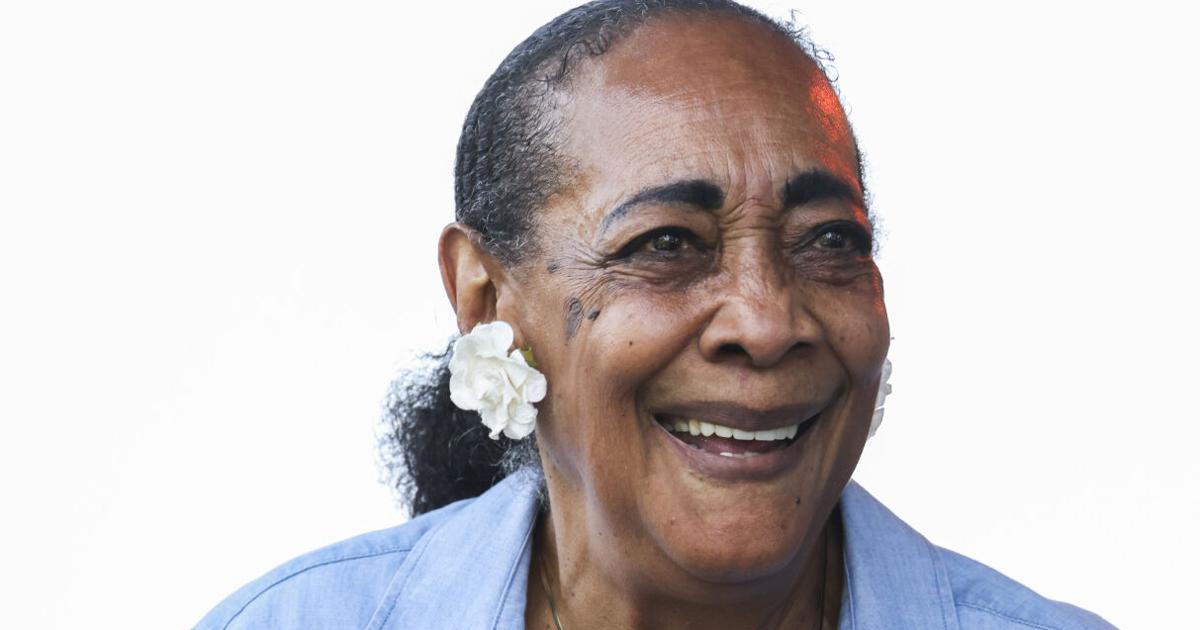
Antoinette Franklin was living in Houston in 2007 when her neighbor asked the question that made her snap: “When are you people going home?” She marched inside and told her brother, “Get me the hell out of Texas.”
But returning home couldn’t bring back her mom, who never really recovered after Franklin had to tell her there was no city to go back to. She died two years after Katrina.
“You could see the light drain out of my mother’s eyes when we told her she couldn’t go home,” she said.
Though Franklin eventually found housing through a relief program, many of her neighbors and longtime friends were scattered, “the biggest shuffle of cards,” said Franklin. Her brother, who rode out the storm in the Superdome, had a series of strokes in the following years, and she blames Katrina for it.
Now 78, Franklin still lives in New Orleans but refuses to stay during hurricanes.
“I cannot put myself through that experience ever again,” she said.

Antoinette Franklin performed with James Andrews & the Crescent City Allstars perform on the Urban South Orleans Stage during the Mid-City Bayou Boogaloo Festival along Bayou St. John in New Orleans, Saturday, May 17, 2025. (Photo by Sophia Germer, The Times-Picayune)
Her story is not unique. Dr. Erich Conrad, professor and interim chair of the LSU Department of Psychiatry, said the psychological shadow of Katrina is still visible, especially in older patients. For many, it remains the defining event of their lives.
“There’s a pre-Katrina New Orleans, and then there’s the post-Katrina New Orleans,” he said.
While not all distress rises to the level of PTSD, Conrad said many people experience what he called “anniversary anxiety” as the end of August approaches. Still, there is a silver lining: for some, surviving Katrina fostered resilience, a feeling that if they got through that, they can get through anything.
“People tend to be prepared; they sort of know the drill,” said Conrad.
A 15-year longitudinal study conducted by Dr. David Abramson, director of the Center for Public Health Disaster Science at NYU, followed more than 1,000 Gulf Coast residents after Katrina.
“It did take 10 years for a lot of folks,” said Abramson. “By the 13- or 14-year mark, they felt like their lives were at least as good, if not better, than they had been before the hurricane.”
Abramson said some participants found strength in having survived Katrina, a phenomenon psychologists call “post-traumatic growth.” Others, however, struggled to fully recover, particularly those who lost their communities.
“The loss of connections and community was profound,” he said. “People often were never able to get that back.”
In the years after Katrina, people often greeted one another with a simple question: “How’d you fare?” For Tulane University trauma expert Dr. Charles Figley, who studied survivors in New Orleans, the phrase captured something deeper than small talk. “It’s a way of getting some sense of how the person is surviving these days,” he said.
For people struggling with storm-related anxiety, returning to that check-in mentality is useful.
“Reach out to your family. Talk to someone,” Figley said. “To be able to take a deep breath as a result of the conversation, that’s an indication that you’re feeling better. And I assure you, the person who’s been talking to you will feel better as well.”
For Franklin, resilience meant becoming the master of her own thoughts.
“There’s so many negative things that come with negative thoughts — they are powerful. And so I choose to think positive,” she said.
Watching her community endure and rebuild reinforced that mindset.
“When you see people surviving and thriving, and falling down and getting up, you realize that we’re much more powerful than we give ourselves credit,” Franklin said.
link