Oklahoma mental health agency unable to make payroll

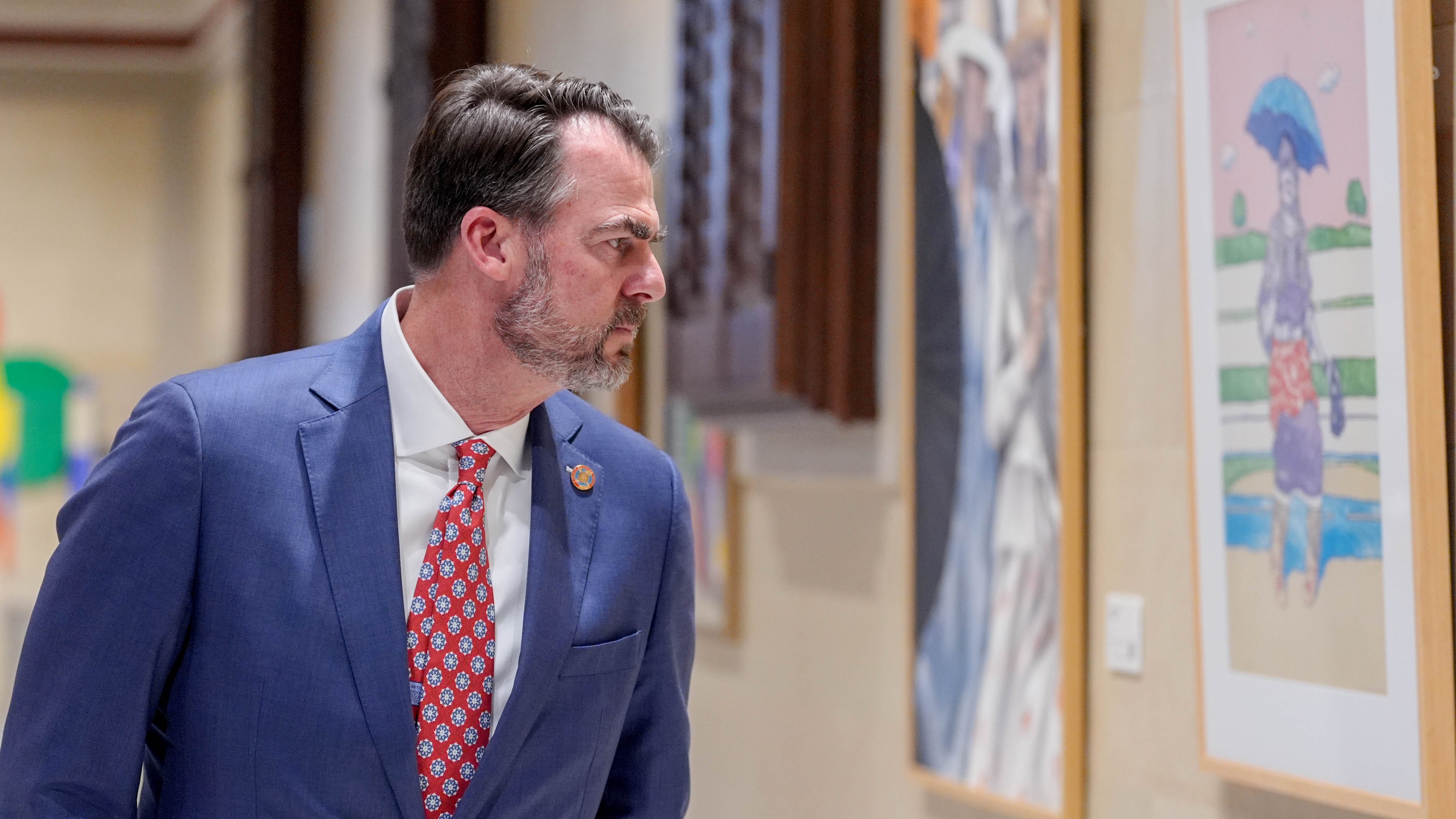

Oklahoma Gov. Stitt discusses state audit into mental health dept.
In a weekly briefing with the press, Gov. Kevin Stitt addressed protocols and reasoning behind state audit into Oklahoma’s mental health department.
Office of the Governor Kevin Stitt
- Oklahoma’s Department of Mental Health and Substance Abuse Services is $23 million short of funds and cannot make payroll for May 7.
- The agency’s proposed budget for fiscal year 2026 has yet to be submitted to legislators, sparking frustration by state leaders.
- A House special committee investigating the agency’s finances will invite Commissioner Allie Friesen to testify further.
The Oklahoma Department of Mental Health and Substance Abuse Services does not have enough money to pay its employees next week, a top lawmaker said, as legislators continue to dig into the agency’s unresolved financial crisis.
In a late-night email to House members on May 1, House Speaker Kyle Hilbert said House Majority Leader Mark Lawson had received an email that afternoon saying the agency has insufficient funds available to make payroll for May 7, and the department is $23 million short for the remainder for fiscal year 2025.
“This is the first we have heard from the agency about being unable to make payroll,” Hilbert, R-Bristow, said in the email. “On March 31, in a meeting in my conference room, I specifically asked if there would be any cash flow issues before the end of May and was assured there would not be.”
Hilbert wrote in the email that the agency’s commissioner, Allie Friesen, had confirmed the report Lawson received was accurate. He said Friesen told him that she was first made aware of the issue on April 30 after 3 p.m.
In a statement, Friesen said the agency is working with lawmakers and the governor’s office to ensure it can keep providing services and retain staff while addressing longstanding structural issues that have impacted the agency.
“This process, while challenging, is essential to strengthening financial systems, improving oversight, and ensuring operational integrity,” she said. “We remain committed to transparency, accountability, and building a stronger foundation to better serve Oklahomans in need of mental health and substance use support.”
The agency’s inability to make payroll was first reported by Nondoc, an online news outlet.
Christa Helfrey, a spokesperson for the state’s Office of Management and Enterprise Services, which handles payrolls for state agencies, said OMES is working closely with the mental health department as it works through its budget woes and will assist if needed. Helfrey said formal requests have not yet been made.
Hilbert and Senate Pro Tempore Lonnie Paxton, R-Tuttle, agreed to speak on the morning of May 2 to discuss next steps for the mental health department. The details of that conversation have not been made public.
The development comes after Friesen told lawmakers in April that the agency faced a $43 million deficit. She spent more than two hours on April 17 testifying in front of a special committee in the House that has opened its investigation into the mental health department.
During the hearing, Friesen described inheriting a “chaotic” agency after Gov. Kevin Stitt appointed her as commissioner in January 2024.
House Minority Leader Cyndi Munson, D-Oklahoma City, said questions about the agency’s ability to make payroll increases her concerns about the agency’s funding issues as the Legislature works to finalize the state’s budget.
“This department offers critical services to Oklahomans and needs to be funded properly for the well-being of our state and its citizens,” she said. While the legislature and the Legislative Office of Fiscal Transparency continue to investigate this matter, it is important to remember that real Oklahomans’ tax dollars are at stake here.”
Legislative leaders frustrated as mental health department’s stalls 2026 budget request
Hilbert said during his weekly news conference on May 1 — before he had learned about the payroll gap — that the special committee will invite Friesen and agency leaders to come back and testify further. He said that the conversation should happen in a public environment.
“I have the utmost faith in members of the Legislature and our staff, but frankly, with the scope and breadth of this problem, I want all 4 million Oklahomans helping us dig into this,” Hilbert said.
Hilbert said that Friesen and the agency’s budget team had met with him, along with House and Senate budget leaders, on April 29 to explain proposals on how the agency can shrink its financial deficit to $6.3 million.
But the meeting left many of legislators’ questions unanswered about the fiscal year 2026 budget, he added.
“We still don’t even know what the department’s request is for FY 26, let alone what we as legislators would ultimately decide to fund,” Hilbert said.
Paxton echoed Hilbert’s frustrations on May 1, saying that his concern lies with the state’s vulnerable residents who the department is supposed to serve.
“I’m very concerned that what’s being lost in this is who we’re trying to serve, and we want to make sure we follow through on that, and make sure that our fellow citizens who need that help have the opportunity to get it,” he said.
link