National Park Medical Center and Saline Health System, both part of Lifepoint Health, recently launched the Special Delivery Program, a new initiative aimed at improving postpartum care and reducing maternal mortality. It is modeled after a similar program launched by the hospitals’ sister facility Saint Mary’s Regional Health System in Russellville in 2023.
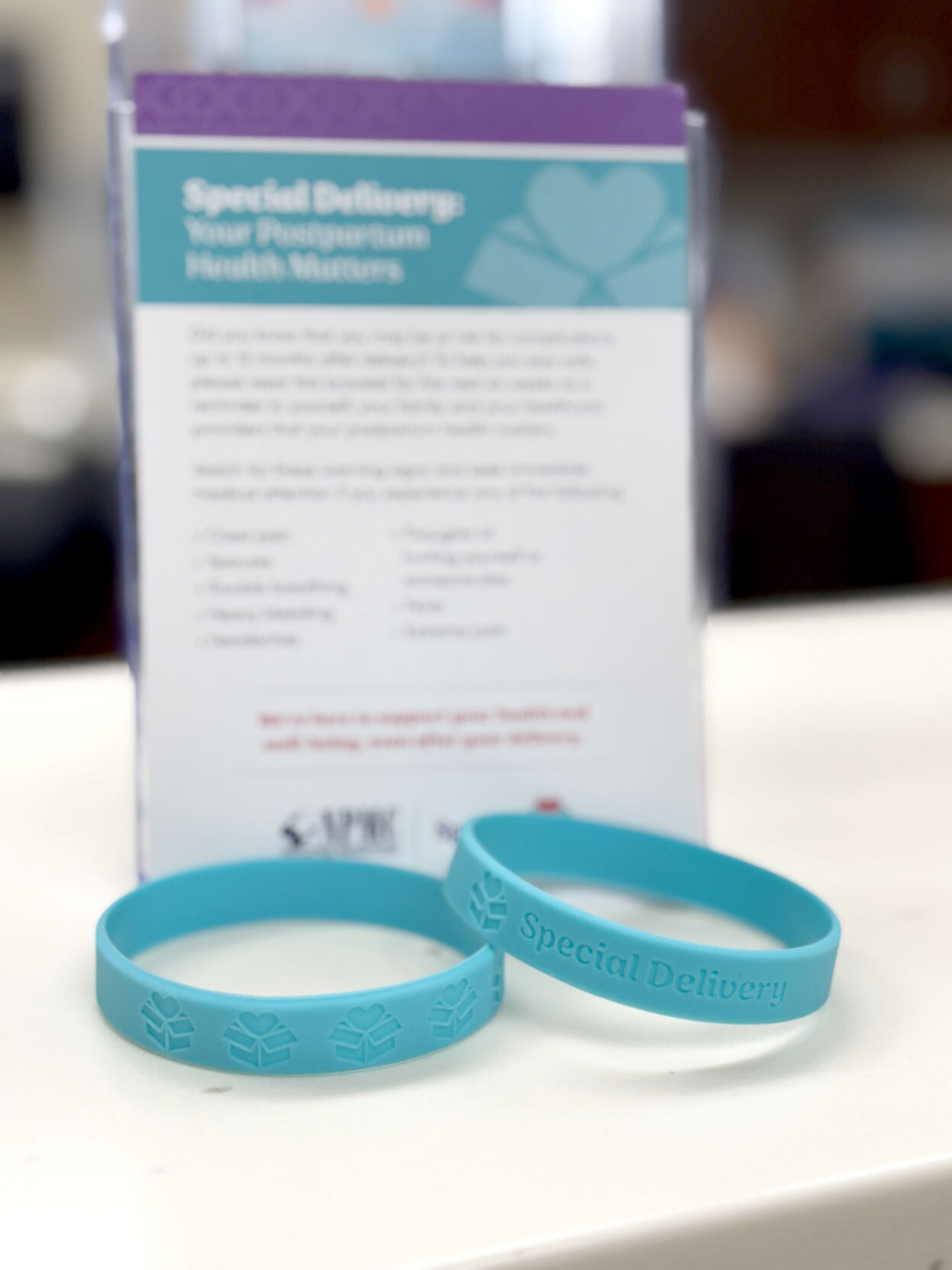
As part of the Special Delivery Program, the hospital provides all postpartum patients with wristbands to wear for six weeks after delivery to help ensure these patients receive timely and appropriate care for any potential complications. Each patient also receives a medical alert wallet card and special cell phone lock screen graphic before leaving the hospital. These tools help healthcare providers identify postpartum patients quickly, reducing the risk of misdiagnosis.
“The Special Delivery Program reflects our commitment to advancing maternal health by prioritizing early intervention and raising awareness about the risks associated with the postpartum period,” said Payton Mills, director of the labor and delivery team at Saline Health System. “The wristbands act as a visible reminder for patients, families and healthcare providers to remain vigilant about postpartum health during this critical time.”
Many postpartum complications, such as anemia, hypertension, heart conditions, and infections, occur days or weeks after delivery, and 53% of pregnancy-related deaths happen between 7 and 365 days postpartum. The Special Delivery Program seeks to change this by empowering postpartum patients to advocate for their health and ensuring providers are aware of recent deliveries when diagnosing and treating these patients.
“What seems to be such a simple thing can actually make a huge impact on maternal health outcomes in Arkansas, which has one of the highest maternal morbidity rates in the nation,” said Ashley York, director of maternal child services at National Park Medical Center. “Signs and symptoms that can be life-threatening warning signs to a postpartum patient may not be ominous for someone that hasn’t recently been pregnant. These bracelets can alert health care providers or even prompt the patient to alert the providers so that they may view the symptoms through a postpartum lens.”
In addition to wearing the wristband, family members, friends, and community members are encouraged to “check in” on patients that recently delivered during this critical postpartum period.
The Special Delivery Program is not intended to replace postpartum provider visits, but to serve as an additional tool to support patients as part of their overall postpartum care plan. Attending scheduled postpartum appointments remains essential for recovery and for addressing any concerns directly with a healthcare provider.
“Often times, and even for myself before doing this research, the assumption is that once delivery has happened, the complications related to pregnancy are no longer a risk,” said Morgan Keeling, director of the labor and delivery team at Saint Mary’s Regional Health System. “That is not the case. A pregnancy-related complication can happen from the time of conception all the way through the first year after delivery. The signs and symptoms of these complications may resemble other medical diagnoses but require different treatment. Having the bracelets for our patients is an alert to other healthcare professionals and a reminder to the patient so that she may be treated appropriately.”