SC jail suicides expose deadly mental health crisis
EDITOR’S NOTE: This story contains discussion about suicide. If you or someone you know is in crisis, help is available by calling 988.
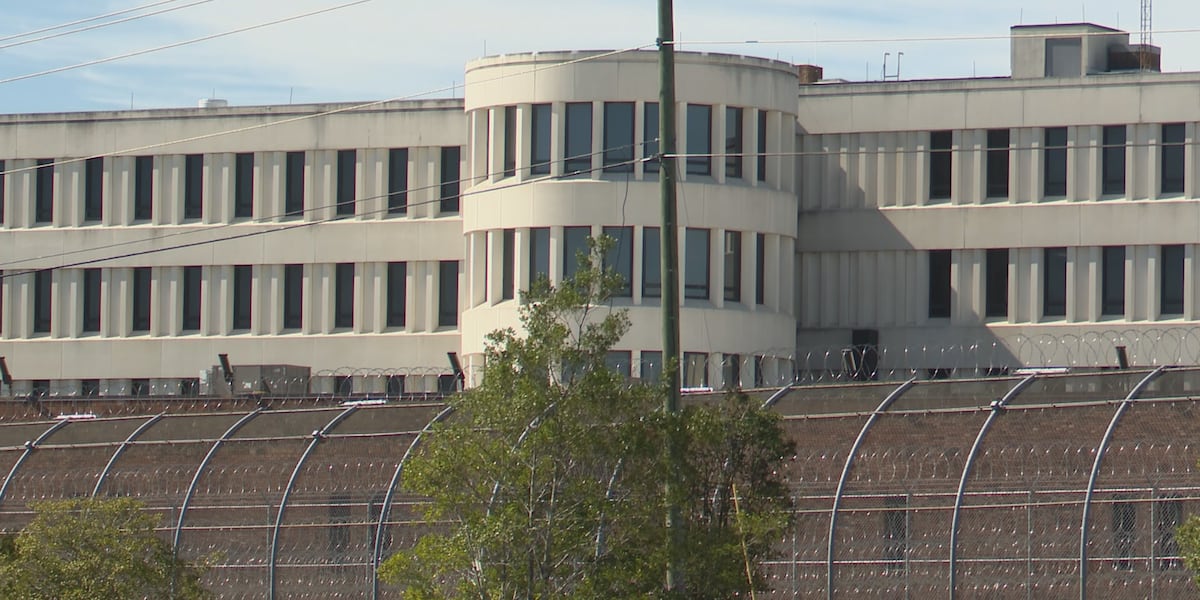
CHARLESTON, S.C. (WCSC) – Lowcountry jail administrators say more than half of those sitting in South Carolina jails right now are suffering from mental illness, but most facilities lack the resources to help them.
Inmates inside jails throughout South Carolina are waiting for months, sometimes even over a year to receive court-ordered mental health treatment. And while waiting for help, inmates are committing suicide.
‘He was asking for help’
Forrest Kreider was an inmate inside the Charleston County Jail who repeatedly voiced feelings of depression to staff and cellmates for months. And when his father, Shawn Kreider, found out his son had taken his own life in April 2024.
“I was angry,” Kreider said. “I was really angry and upset that he’d be unsupervised, knowing he’d come out and said he was depressed.”
In February, Kreider spoke with the behavioral health staff and stated he felt depressed, helpless and a burden to his family because of his not knowing what he would do once he got out. Staff told Kreider to focus on the present and not the future, and also recommended yoga to avoid depression, the investigative report states.
Even just a day before Kreider was found hanging in his cell, he completed a Psychiatric Provider Initial Evaluation and stated he was depressed about being homeless, had no energy during depressive episodes and slept a lot.

Kreider was prescribed an unknown medication and killed himself one day later.
“The psych help needs to be there. There needs to be more support systems in place for those people; for Forrest and others, too,” Kreider said.
Another Charleston County inmate, Jordan Bell, committed suicide in 2024. Just days before his death, Bell attempted suicide and made suicidal statements. Yet he was taken off suicide watch.
Four days before his death, Bell showed a deputy a long piece of mattress cover made into a rope. Bell told the deputy that he tried to kill himself with it, but it did not work.
Following the information from Bell, a deputy did not fill out an observation form to detail the interaction. Documents state the deputy advised that she normally filled out the form, but in this case, “she did not and does not know why she did not.”
“If somebody’s going to reach out and say, ‘I’m depressed,’ then there needs to be a little bit more supervision, even if it’s a 15-minute checklist of, ‘Oh, I got a check on this inmate,’” Kreider said.
Kreider and Bell’s deaths highlight a statewide crisis in South Carolina’s jails.
Over 80 inmates inside South Carolina jails and prisons committed suicide between 2015 to 2021, according to data from IncacerationTransparancy.Org.
While some jails have in-house behavioral health units to address inmates’ urgent mental health needs, like the Charleston County Jail, others in South Carolina and across the nation do not have any dedicated treatment team or unit.
“They’re feeling ashamed or they’re not wanting to share those pieces because they’re feeling ashamed of being in jail to begin with,” Shawn Kreider said. “I know that’s how he (Forrest) felt; he felt really bad about that situation.”
Competency treatment orders
Other than limited mental health resources inside jails, the only outside option for inmate help is one facility maintained by the Department of Mental Health in Columbia.
That facility only has 200 beds available, but the lack of physical space is not the only problem.
“You can have all the physical space you want in the world but if you don’t have enough medical providers trained and ready to deploy to staff those beds…you have to staff it appropriately,” Department of Mental Health Director of Forensic Services Psychologist Dr. Kelly Gothard said.
The Department of Mental Health said as of Sept. 26, 129 people were on the waitlist for a bed in Columbia after a judge ordered them to restoration for 180 days. Twenty-two of those inmates have waited for over 200 days.

A competency restoration treatment order is to help get someone strong and well enough mentally to proceed with prosecution and their court case. In other words, preparing an inmate to be competent enough to stand trial.
“Particularly for competency restoration treatment, that is a bandaid to get you through the court process,” Gothard said.
“We have judges ordering people for restoration and there is nowhere for them to go,” Charleston County Jail Tactical Operations Department Manager Mike Stanley said. “Right now, we’re having these conversations because people are waiting a year to get this mental health restoration, and in that year, nothing happens. Their case isn’t going anywhere.”
Since the pandemic, Gothard said DMH has seen a 67% increase in competency restoration treatment orders.
“It has been this really massive increase, and despite a lot of efforts and trying to keep up, we’ve been spread very thin and have not been keeping up in the way that I hoped that we could,” Gothard said. “The resources are just not sufficient at this point in time.”
Insufficiency of resources is not only the number of beds but how long inmates have to wait for a coveted spot inside the facility.
“Ideally, the Office of Mental Health would have enough beds for everybody and enough staff to treat everybody, but that’s not the reality that we’re living in,” Charleston County Jail Administrator Stan Davis said.
As of Aug. 14, the Charleston County Sheriff’s Office said 20 inmates were waiting for bed space in Columbia. And that wait can sometimes take up to a year. Five inmates also had emergent court orders who were waiting to go to Columbia.
“It’s frustrating; it’s a vicious cycle and it is for them (inmates) too because some of them are not cognitive of what’s actually occurring with them,” Stanley said.

Even when an inmate can finally get a bed and complete their required treatment in Columbia, the court backlog may force an inmate to wait for months or even years before their criminal case is seen before a judge.
“It’s not unusual for these people to decompensate because they’ve come back from restoration,” Stanley said. “They go up there, they get medication, they get back on track, they become healthy, they become competent enough to be able to participate in their trial. They feel good, they don’t want the medication and they decompensate. Then it starts all over again.”
Solutions and hopes for change
A 2022 state law allows jails to provide treatment in-house, which could potentially reduce the Columbia backlog. Before the law changed, treatment was only allowed at a hospital and not a detention facility.
The Aiken County jail is currently the only one in the state able to complete both competency evaluations and restoration inside its building.
“My staff has been working very closely with the jail on that,” Gothard said. “It’s been really successful, and it’s really reduced the wait times for Aiken.”
The next step is to be able to fulfill competency restoration orders here in Charleston County. It’s currently in the works but on-hold because of understaffing.
“If we can do the medication, the individual therapy and the group therapy here to get them mentally stable while the Office of Mental Health can come in and do the education component, then we may be ready to go,” Davis said.
Over 17,000 medications are administered each week inside the Charleston County Jail.
Medication is important in treating mental illness, which is why Gothard said within a jail setting, medication over objection is crucial. Under South Carolina law, medication over objection allows mental health facilities and correctional institutions to medicate someone against their will under specific conditions.
“We currently don’t do that here and that’s one of the significant hurdles that the legal teams and the medical teams are working out. How do we make that happen?” Davis said.
“Medication over objection has greatly reduced the amount of time that they needed to be under treatment,” Gothard said. “Having that ability also allows people to be treated more quickly within a jail setting and it’s really no different than another medical setting.”
And for incarcerated individuals like Kreider, who are directly suffering, his father is asking for more mental health screening and resources to go further.
“I guess to me, that’s the only thing I have right now is speaking out, talking about mental health and talking about suicide,” Kreider said. “There needs to be more of a helping and supportive environment around mental health and helping people who might have those struggles.”
If you or anyone you know are having suicidal thoughts, call 988.
Copyright 2025 WCSC. All rights reserved.
link